From Artificial Ice to AI: The History of Tech at Winter Olympics
A look at the evolution of Winter Olympics technology — from wooden skis to cloud broadcasting and machine intelligence.
Instant Replay’s Olympic Origins
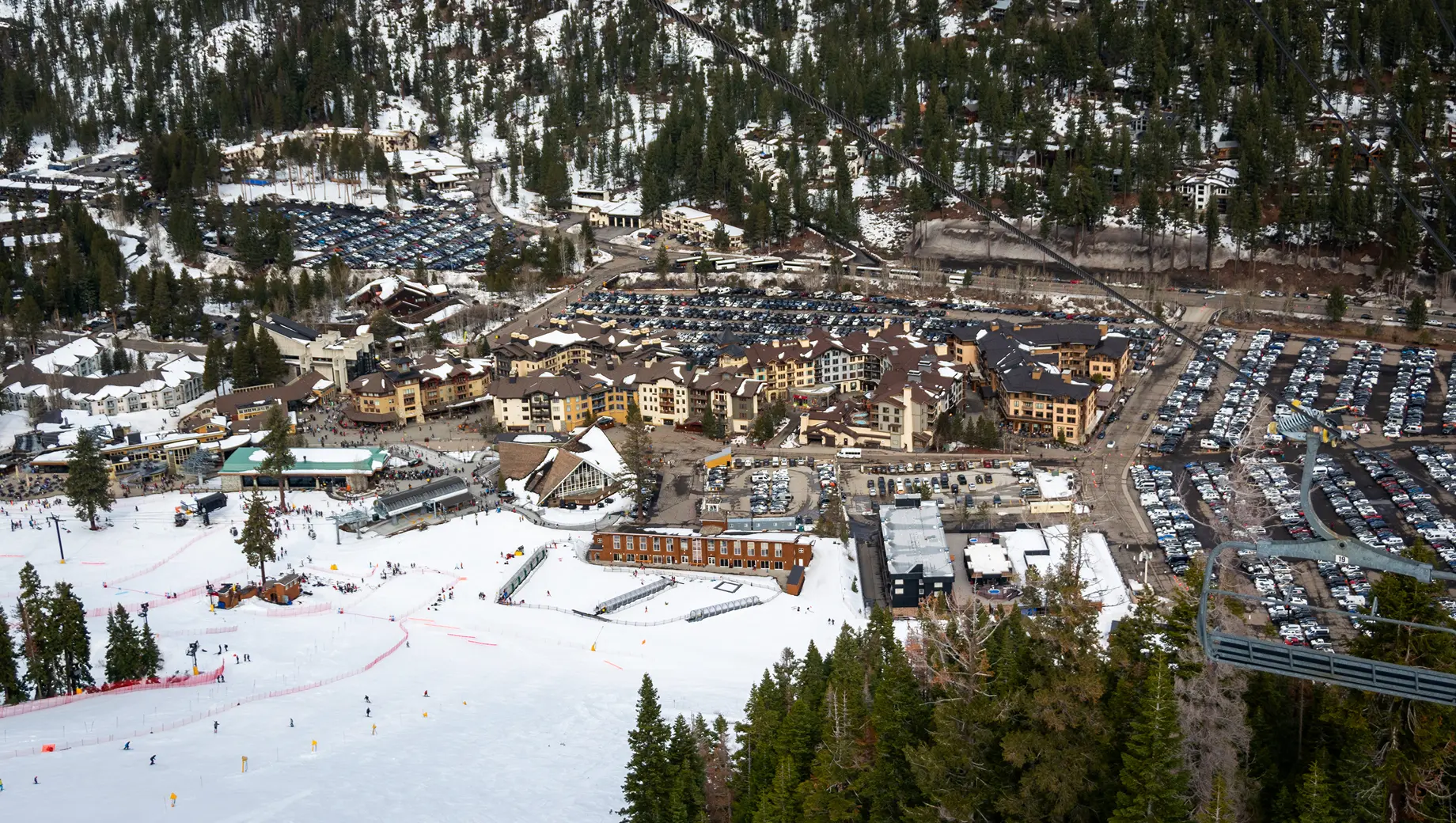
Kicking off a decade of significant technological advancements that would shape the future, the 1960 Winter Olympics held in Squaw Valley, USA gave rise to several key technological innovations, perhaps most notably leading directly to the birth of instant replay.
During the Games, officials uncertain of whether a skier missed a gate or not during the men's slalom asked US broadcast network CBS if they could review their videotape of the race.
This seemingly simple request led CBS Sports Director Tony Verna to invent the first iteration of the now-common instant replay technology for sports broadcasting, with the first instant replay during a live sporting event to take place just a few years later, on December 7, 1963, during the network’s broadcast of the Army-Navy football game.
Despite having been inspired by the 1960 Winter Olympic Games, it wasn’t until much later, in 2002, that actual instant-replay machines were first used by ice skating judges at the Salt Lake City Games, in response to a previous judging scandal.
Computers Enter the Games
Another major technological milestone at the 1960 Winter Olympics was the first use of computers for sports data processing.
More specifically, a computer provided by American tech giant IBM — the RAMAC 305 — was used to tabulate results and print standings in both English and French within minutes, marking the first time computing was applied in this way and streamlining a manual process that previously took hours.
Manufacturing Winter
While the 1960 Winter Olympics featured the now-prolific Zamboni ice resurfacing machines for the first time, ensuring smooth ice in the speed skating oval, the first use of artificially created ice surfaces during the Games was in 1964, in Innsbruck, Austria.

During the ‘64 Winter Olympics, the weather was unseasonably warm, threatening to erode (or melt) the quality of the competition. To counteract this, event organizers ordered construction of the first artificial tracks for the fan-favorite bobsleigh and luge events. Ever since then, both bobsleigh and luge tracks are typically artificially made for the Games.
To facilitate this construction, Austrian soldiers were sent to collect the ice required — 20,000 bricks of it — from nearby Alpine mountain peaks, from which they also gathered an additional 40,000 cubic meters of snow to add to the Olympic ski runs, packing the slopes down by hand to prevent the snow from melting completely in the rain.
In 1980, the Winter Games in Lake Placid, New York featured the first Olympic use of snow machines, resulting in artificial-snow-covered slopes that held up better to rain and warmth than natural snow. Since then, artificial snow has become commonplace at the Games, with events in some cities over the years relying almost 100% on it.
Skis, Reinvented
By now you probably won’t be surprised to hear that yet another technological advancement, this time in sports equipment, appeared prominently for the first time at the 1960 Winter Olympics — metal skis.

Up until that point, traditional wooden skis had been the norm at the Games, but in 1960 Frenchman Jean Vuarnet put metal skis in the spotlight when he won the men's downhill gold medal using groundbreaking riveted aluminum skis, leaving a lasting legacy that transformed Olympic skiing forever.
The Skates That Changed Speed Skating
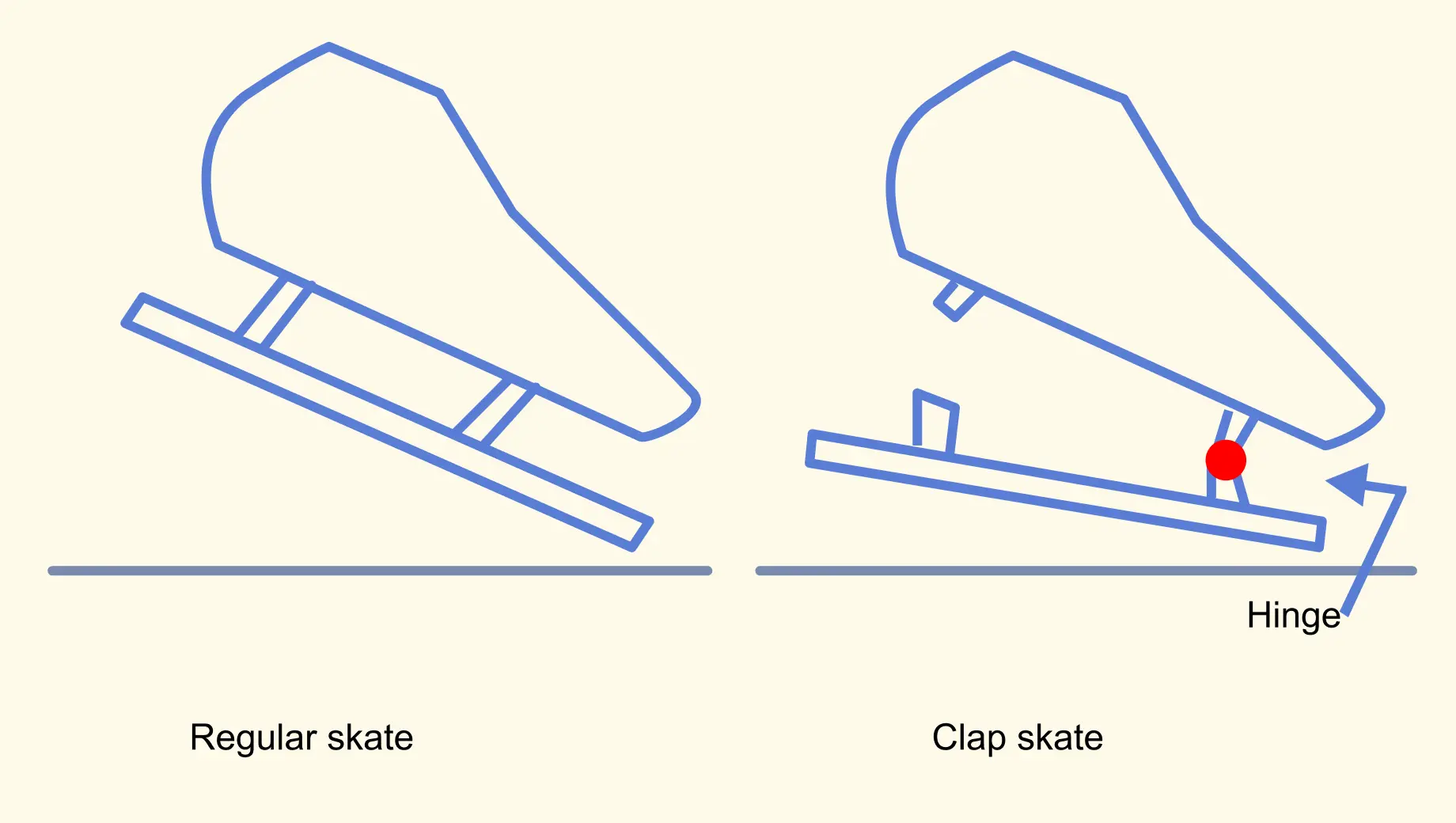
At the 1998 Olympic Winter Games in Nagano, Japan, 18 speed skaters beat the previous record for the men’s 1,000-meter speed skating event. How, you ask? The answer lies in what was at the time a recently-approved piece of skating technology: clap skates.
This new type of skate featured a unique hinge mechanism that connected the blade to the boot, allowing the blades to remain in contact with the ice longer and leading to faster speed skating times. Clap skates are still very much in use by Olympic speed skating athletes today.
The Games in Color
Although the color television system was invented decades earlier and color TV broadcasting had become more common throughout the 1960s, the 1968 Grenoble Winter Olympics marked the first time the Olympic Games were broadcast live in color in their entirety.
This set a new standard for global broadcasting, as viewers across the world were wowed by the more vivid, more immersive viewing experience. After this historic moment, full-color broadcasting of the Olympics became the norm.
Live Coverage Goes Mobile
During the 2006 Winter Olympics in Turin, Italy, live coverage of the games became available on mobile phones for the first time.
To appreciate just how innovative this was at the time, consider the fact that the first iPhone didn’t even come out until 2007! That’s right, we’re talking about the Motorola Razr flip phone era.
A Torch Built for Winter
No matter where the Games are held and how many kilometers lie between Olympia, Greece and the Winter Olympic host city, the Olympic Torch Relay is an important event leading up to and coinciding with the opening ceremonies.
However, the 1988 torch relay for the Calgary Winter Games would be the longest the world had seen at the time. It was set to cover 18,000 kilometers, with much of it taking place in harsh winter conditions across Canada — the torch made its way as far north as Inuvik in Canada’s Northwest Territories.
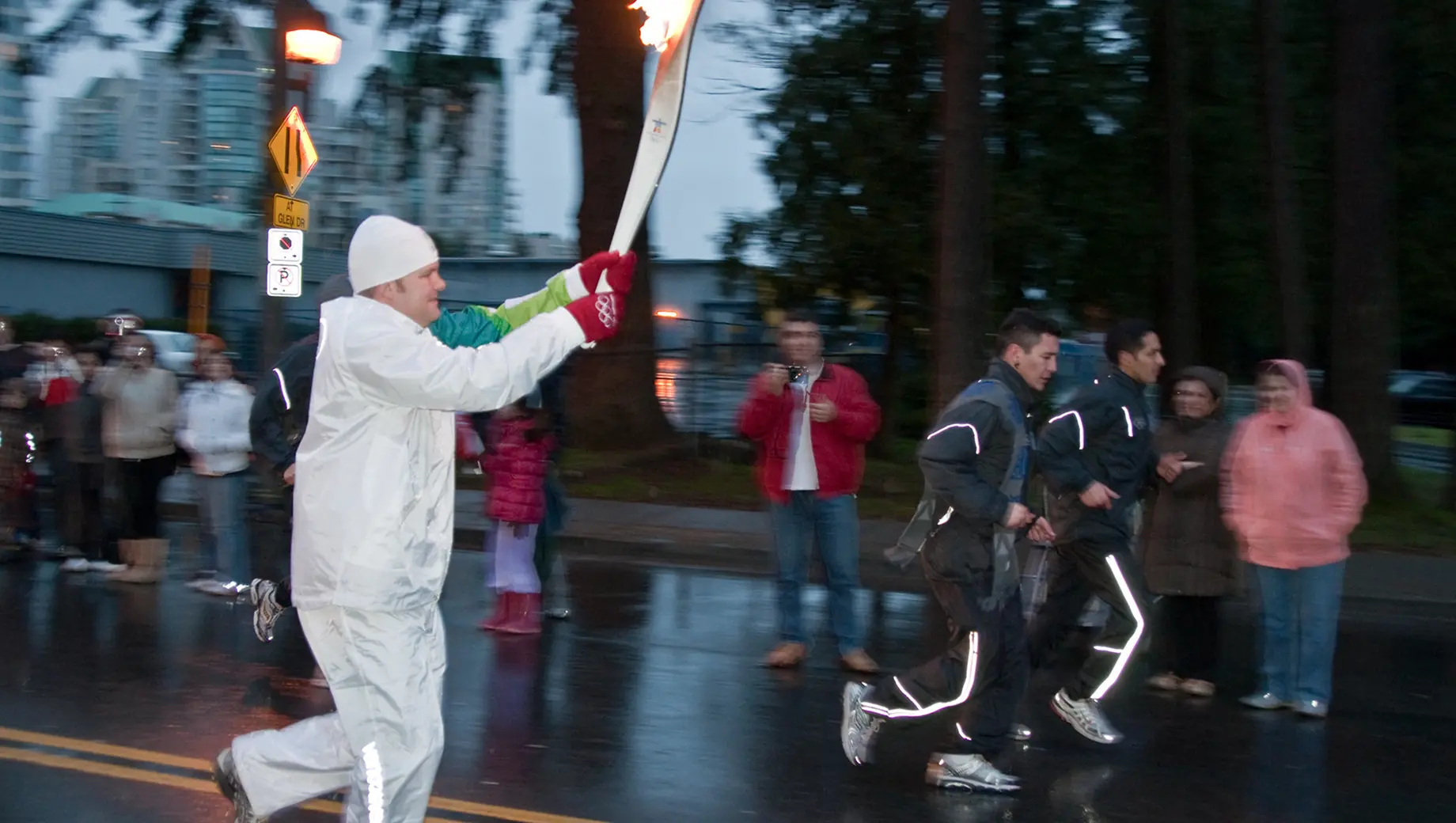
To ensure the torch wouldn’t go out at any point along the way from Olympia to Calgary, the National Research Council of Canada developed a new lightweight Olympic torch powered by specialized all-weather fuel, designed to withstand whatever the climate could throw at it.
The torch itself was designed to look like the Calgary Tower, and was installed in a cauldron at the peak of the real-life tower upon arrival to Calgary, where it remained lit for the duration of the Games.
The Future Will Unfold at Milano Cortina 2026
Now, let’s fast-forward to today. In the exciting lead-up to the 2026 Milano Cortina Winter Olympics, it’s already clear that the Games are set to feature significant technological innovations, especially in the areas of broadcasting and fan engagement.
AI Makes Its Olympic Debut
AI is everywhere these days, so it may come as no surprise that your favorite AI assistant has now been officially introduced to the Winter Olympics as “Olympic GPT.” This custom GPT chatbot provides fans with verified information, results, and rules sourced in real time from a trusted Olympic data library.
Not only that, but users can also ask the AI anything about past Olympic Games — think “what country won the most gold medals at the 2010 Winter Olympics?”
Bringing Olympic Moments To Life
AI will also be used at the 2026 Winter Olympics to enhance storytelling and analysis. This includes an AI-driven curling-stone-tracking system that visualizes the stone’s path, speed, and rotation for viewers, as well as multi-camera replay systems (MUCAR) that create 3D models of athletes in motion. Instant replay tech has certainly come a long way since being inspired by the 1960 Winter Games!

Cloud Coverage Comes to the Alps
Up until now, Olympic broadcasting has involved parking mobile broadcast vans near venues and connecting them to the cameras filming events via long cables. However, the Milano Cortina Games necessitate a different approach…
The Stelvio Slope, renowned as one of the world’s most technical and challenging ski slopes, will feature in the men’s downhill ski event, and the old wired approach to Olympic broadcasting simply won’t work there.
Instead, the Olympic Broadcasting Services (OBS) have opted to switch over to cloud-based broadcasting, allowing technical teams to control everything wirelessly from within remote broadcast studios, rather than from out in the cold on the Alpine peaks.
Drone POV Takes Flight
More than ever, at-home spectators want to feel like they’re actually at an Olympic event — speeding over the snow and ice themselves, even.
Keeping up with the times, the 2026 Winter Olympics will feature First-Person View (FPV) drones, which are to be deployed mainly in sliding sports like bobsleigh, luge, and skeleton. The FPV drones will follow the high-speed athletes to provide a highly dynamic, immersive perspective for viewers. What a leap from viewers experiencing the first color TV broadcast of the Olympics to taking it all in from a drone’s-eye-view, wouldn’t you say?
Next-Gen Skis
Decades ago, full-metal skis were a major innovation put on display at the Winter Olympics. Today, skis fitted with nanotechnology for adaptive friction control and 3D-printed parts for customization are the buzz around town.

With athletes at peak physical performance, every incremental performance gain counts, and constantly finding new ways to improve the tools of the trade is one way to achieve those gains.
Did You Know?
The Winter Olympics have time and time again played host to some of the most dramatic and extraordinary moments in sports history.
At the 1980 Lake Placid Winter Games, the U.S. men’s ice hockey team — widely considered the tournament’s underdog — pulled off an upset 4-3 win over the then-Soviet Union team, a hockey superpower that had won five of the previous six Olympic men’s ice hockey gold medals. This unforgettable moment was dubbed the “Miracle on Ice.”
Despite having the youngest team in both the tournament and in U.S. national hockey team history, team USA went on to win the gold medal — later defeating Finland in the final — and the rest, as they say, is history.
Olympic ice hockey history will again be made at the 2026 Games when our long-time partner and client, the NHL, takes part in the Winter Olympics for the first time since 2014.
After more than a decade sitting the Olympics out, NHL players will once again hit the ice to compete for their respective countries in the men’s hockey tournament at the Milano Cortina Winter Olympics.
To coincide with this important milestone, the League has launched a brand-new interactive records website chronicling the NHL’s participation in the Winter Olympics over the years — a system ObjectStyle Sports is proud to have helped build.
Users can look up everything from individual player stats to team records and game highlights, offering an in-depth look at nearly two decades of history for one of the most exciting and eagerly anticipated Winter Olympic sports.
Conclusion
While it’s no longer necessary for an Olympic host country to send its soldiers out to harvest snow and ice for artificial tracks and slopes, there’s always room for technological innovation at the Winter Olympics, and the Milano Cortina Games will be no exception.
The Winter Olympics have served as a constant proving ground for innovation under pressure, and what starts out as a practical solution to cold weather, complex terrain, split-second judging, or fan demands often snowballs into technology that reshapes not only elite sport, but how the entire world watches, understands, and participates in it.
Thinking about what’s next for your sports organization? ObjectStyle Sports can help!
Let’s go
About ObjectStyle Sports
ObjectStyle Sports designs and delivers high-performance digital platforms for professional leagues, teams, and federations. With a holistic understanding of the sports ecosystem, the company helps sports organizations revamp their internal operations as well as fan- and partner-facing digital assets to evolve with the game.